




 Click it and Unblock the Notifications


Latest Updates
-
 Dum Aloo Recipe: The Slow Cooked Flavor Secret Revealed
 -
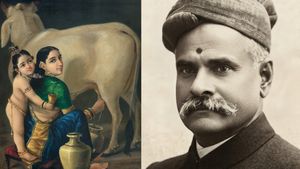 Raja Ravi Varma’s ‘Yashoda and Krishna’ Sells For ₹167 Crore, Breaking All Modern Indian Art Records
 -
 Anthony Anderson to Host Star Search Reboot: Bringing New Talent to the Spotlight
 -
 Dahi Vada – Soft And Fluffy Inside: Master The Perfect Balance Trick
 -
 Ranbir Kapoor's 'Ramayana' Teaser Drops On Hanuman Jayanti 2026, Netizens Compare With Prabhas 'Adipurush'
 -
 Throwback Thursday: Ajay Devgn Turns 57, A Look Back At The 'Drishyam' Star's Iconic 90s Hairstyle
 -
 Paneer Butter Masala Recipe: Restaurant Style Rich Gravy
 -
 World Autism Awareness Day 2026: Expert Points Out Early Signs Of Autism Before Age 3 Every Parent Must Know
 -
 Hanuman Jayanti 2026: Chant These Powerful Mantras And Follow Rituals To Reduce Fear And Mental Stress
 -
 Waking Up To Pee At Night? Your Body Might Be Trying To Tell You Something


Mahashivratri 2026 Date Guide: Know the Correct Day as per Hindu Calendar

Every year, when Mahashivratri approaches, you'll see dates like February 15, February 16, and even February 17 floating around on social media, calendars, and festival guides. For devotees, this can invite confusion, especially when planning to fast, perform pujas, or night vigils.
The reason isn't a mistake. It's all rooted in how traditional Hindu calendars (panchangs) calculate festival dates, based on lunar tithis (phases of the moon) rather than fixed Gregorian dates. Moreover, due to the nature of Lunar Tithis, which can cover a span of at least two days, deviating into a second consecutive date is possible.
How Mahashivratri Dates Are Determined

The Mahashivratri festival is observed on the Chaturdashi Tithi of the Krishna Paksha i.e., 14th day of the waning phase of the Moon in the Hindu month of Phalguna. This tithi is considered auspicious because it marks the night when devotees believe Lord Shiva performed the cosmic dance (Tandava) and also symbolises the divine union of Shiva and Parvati.
These don't align perfectly with sunrise-to-sunset days on the standard calendar. A single tithi can start in the evening of one day and end after sunrise the next day, which is why Mahashivratri celebrations often span two dates.
What Is the Official Date in 2026?
Most traditional Panchangs and astrology guides show that:
- Phalguna Krishna Chaturdashi begins: February 15, 2026, at around 5:04 PM
- Chaturdashi ends: February 16, 2026, at around 5:34 PM
Since the most sacred worship, especially the Nishita Kaal puja (midnight puja), is performed during the night of Chaturdashi, the main celebration night for Mahashivratri in 2026 is the night of Feb 15.
Devotees usually fast, stay awake, chant mantras and perform rituals across the night, with the Nishita Kaal (the midnight moment) being the most spiritually significant.
Why Do Some Calendars List Feb 17?
- Regional variations: In some traditions or regions, there is a possibility that whenever a tithi coincides heavily with the next day, the festival is observed on the next solar day itself.
- Practical timing: In cases where the favorable time has fallen close to late night or early morning hours in a day like Nishita Kaal, the next day (like February 17) may be indicated in some calendars as the official festival day in the Gregorian calendar.
- Panchang interpretations: There is a one-day difference between North Indian and South Indian Panchang traditions due to minor variations in astronomical calculations.
Therefore, you'll see some sites and calendars mention Feb 17 as the day to observe Mahashivratri, especially if they focus on the majority of the tithi falling after midnight into that date.
What Devotees Usually Follow

Most common practice across India this year is:
- Fast and night-long worship on Feb 15
- Break the fast (Parana) on Feb 16
Some regions may name Feb 17 as the festival for convenience, especially when local tithi timing and sunrise align more with that date.
Similarly, temples, such as famous shrines like Mahakaleshwar, schedule their festivities, etc., accordingly, often commencing colourful festivities as early as in the evenings and/or through the night.
A Quick Tip for Observers
If you're planning fasts, temple visits, or midnight pujas:
- Check your local Panchang or temple schedule - they'll use the correct tithi cutoff
- Focus on the Nishita Kaal (midnight hours) - this is the heart of Mahashivratri
Remember that regional calendars may show different dates, but they all refer to the same lunar timing under the hood
Bottomline
So, will Mahashivratri 2026 be "on Feb 17"? It depends on which calendar or tradition you're looking at.
But traditionally and astrologically, the sacred Chaturdashi Tithi of Phalguna falls on the evening of Feb 15 into Feb 16, and that's when most devotees perform night-long puja and fasting. It's this lunar timing, not just the Gregorian calendar date that determines the festival.
In other words: whether you see February 15 or February 17 on your calendar, the heart of Mahashivratri lies in the night of Chaturdashi and the midnight worship, and that's what devotees will celebrate with devotion in 2026.


 Continue with Google